News

Rensselaer Polytechnic Institute (RPI) today announced the appointment of James Misewich, Ph.D., as the Curtis R. Priem Quantum Computing Constellation Chair, effective January 1, 2027.
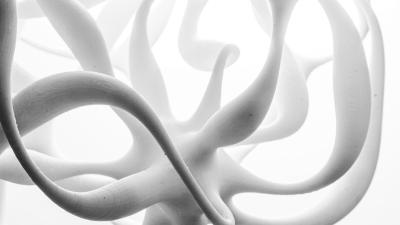
For more than a century, scientists have wondered why physical structures like blood vessels, neurons, tree branches, and other biological networks look the way they do.
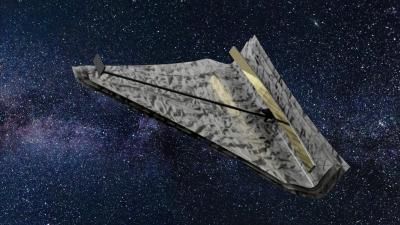
A new study from RPI and NASA reveals that a radically different telescope design could accelerate the search for potentially habitable worlds beyond our solar system.
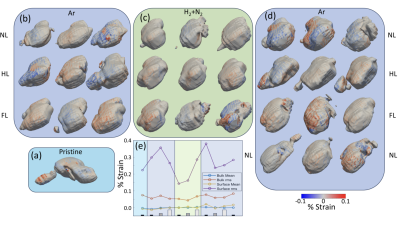
Researchers at RPI’s schools of science and engineering are exploring new ways to manipulate matter with light to unlock a new generation of computer chips, photovoltaic cells and other advanced materials.
Researchers at Rensselaer Polytechnic Institute (RPI) are tackling one of the most complex challenges in the world of quantum information – how to create reliable, scalable networks that can connect quantum systems over distances.
Rensselaer Polytechnic Institute’s Quantum Computing and Quantum Information team is making significant strides in understanding and optimizing quantum systems, with two papers published this month in Physical Review Letters and Science Advances.

Rensselaer Polytechnic Institute’s Gwo-Ching Wang, Ph.D., Travelstead Institute Chair, is the 2025 recipient of the Davisson-Germer Prize in Atomic or Surface Physics from the American Physical Society (APS).

As Rensselaer Polytechnic Institute celebrates its Bicentennial, we reflect on the many great minds, pioneers, entrepreneurs, and game-changers who are Rensselaer alumni.
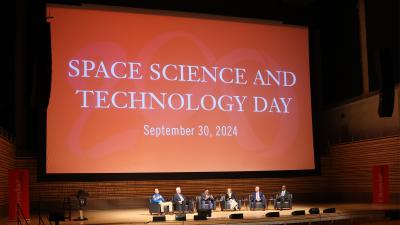
Rensselaer Polytechnic Institute has long been at the forefront of space exploration and discovery.
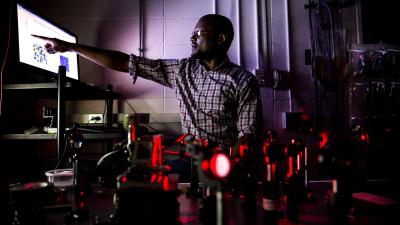
Our nation’s security depends on the effective detection of nuclear materials at our borders and beyond.
